My First Solo Trip to Japan: Lessons, Laughs, and Life-Changing Moments
I booked my first solo travel Japan trip on a whim, landed at Narita with a backpack, a pocket Wi-Fi, and exactly zero words of Japanese. Two weeks later I left with a full heart, a camera roll of 3,000 photos, and a promise to come back. This is what happened in between — the panic, the ramen, the stranger who changed my whole trip, and everything I wish I'd known before I went.
If you've been circling the idea of traveling alone, consider this your nudge. Japan is one of the friendliest places on Earth to do it, and I'll tell you exactly why.
Day 1: Tokyo Overwhelm (In the Best Way)
Nothing prepares you for Tokyo. The sheer scale of Shinjuku Station — more than three million people pass through it every day — nearly sent me straight back to the hotel. Fourteen exits. Signs in three scripts. A river of commuters who all seemed to know exactly where they were going while I stood frozen by exit A16.
So I did the only thing I could: I followed the crowd. I surfaced into the neon and found my first bowl of ramen at a counter-only shop with a ticket vending machine out front. You press a button, hand the ticket to the chef, and sit. No conversation required — which, on day one, felt like a gift.
That ramen was life-changing. Rich tonkotsu broth, perfectly chewy noodles, a soft-boiled egg I still think about. I walked out realizing the thing I'd feared most — being alone and clueless in a giant city — had just handed me the best meal of my year.
How I Got Around Without Speaking a Word
Here's the practical stuff nobody tells you until you're standing at a ticket machine. Japan runs on trains, and the system is astonishingly solo-friendly once you crack it.
- I loaded a Suica card onto my phone and tapped through every station and convenience store. No fumbling for coins, no working out fares.
- Google Maps is flawless in Japan — it gives you the exact train, platform number, and which car to board for the fastest exit. I trusted it blindly and it never let me down.
- A pocket Wi-Fi device kept me online everywhere for a flat daily rate, though next time I'd just use an eSIM and skip carrying the extra gadget and its charger.
The whole time, I never once needed to ask a stranger for directions in a language I didn't have. The infrastructure does the talking.
The Convenience Store Revelation
Japanese convenience stores — konbini — are a genuine cultural experience. 7-Eleven, Lawson, and FamilyMart in Japan are nothing like anywhere else on the planet. Fresh onigiri for around ¥150, egg sandwiches that have a cult following, and surprisingly good coffee for ¥100.
I ate at least one konbini meal a day and regret nothing. For a solo traveler on a budget, they're a quiet superpower: no awkward table-for-one moment, no menu you can't read, hot food at 2 a.m. when jet lag has you wide awake.
What Two Weeks in Japan Actually Cost
Let me demystify the money, because "Japan is expensive" scared me and turned out to be only half true. Here's roughly what I spent per day, midrange and solo:
- Accommodation: ¥4,000-8,000 ($27-53) — capsule hotels and business hotels, spotless and central
- Food: ¥2,500-4,500 ($17-30) — mixing konbini, ramen counters, and one nicer meal
- Transit: ¥1,500-3,000 ($10-20) — local trains, more on days I took the Shinkansen
- Activities and temples: ¥1,000-2,500 ($7-17)
All in, I averaged around ¥12,000-16,000 a day — call it $80-110. The Shinkansen between cities was the big splurge; if you're doing several long hops, a Japan Rail Pass can pay off, so do the math against your route before you buy.
Getting Gloriously Lost in Kyoto
I took the wrong bus in Kyoto and ended up at a tiny neighborhood shrine where an elderly woman was sweeping leaves. She didn't speak English, I didn't speak Japanese, but she gestured for me to sit down, disappeared, and came back with green tea and a piece of mochi.
We sat in silence, sipping tea, watching the leaves she'd just swept drift back down. Twenty minutes, maybe. No shared words at all. It remains the single best moment of the entire trip — and it only happened because I was alone, off-schedule, and open to being interrupted.
That's the secret solo travelers know: the wrong bus is often the right one.
The Nights I Didn't Want Company (And the One I Did)
Solo travel gets pitched as either lonely or a nonstop social party. The truth sat somewhere in between. Some evenings I wanted nobody — I'd grab a konbini dinner, sit by the Kamo River in Kyoto, and just watch the herons. No small talk, no compromise, no explaining myself. That kind of quiet is hard to find at home and impossible on a group trip.
But one night in Osaka I wandered into a tiny izakaya, six seats, no English menu. The chef pointed at things, I nodded, and the salaryman next to me started translating out of sheer goodwill. Three hours and several skewers later I had a phone full of restaurant recommendations and a genuine new acquaintance. That's the solo traveler's superpower: you're approachable in a way groups never are. People talk to the person sitting alone.
The lesson stuck with me — solitude and connection aren't opposites on a solo trip. You get to dial between them, night by night, exactly as much as you want.
The Onsen I Almost Skipped
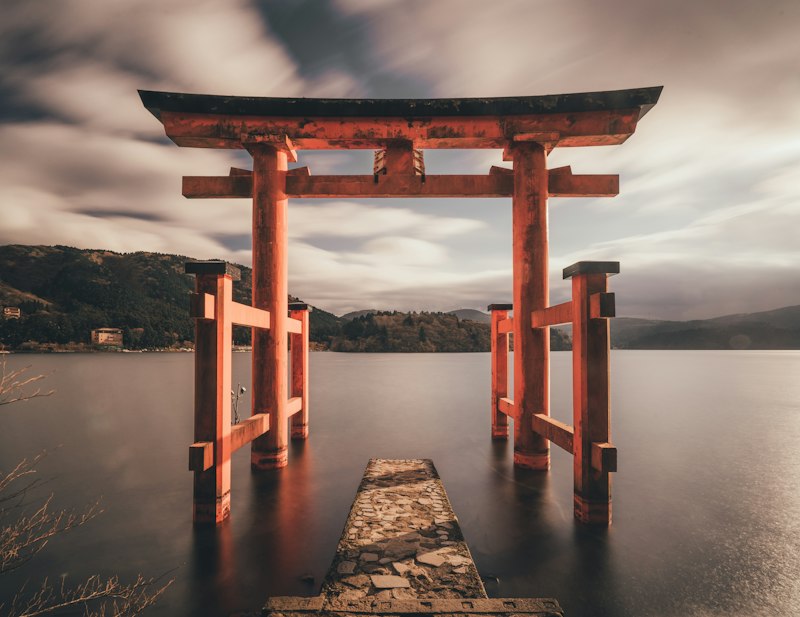
I was terrified of public bathing. The whole idea of being naked with strangers felt impossible. But at a small onsen in Hakone, easing into hot mineral water with Mount Fuji glowing pink at sunset, I finally understood why the Japanese treat this as something close to sacred. Every knot of travel stress I'd been carrying just dissolved.
Lesson learned: the things that scare you before a solo trip are usually the things you'll be proudest of afterward.
What I'd Pack Differently Next Time
Hindsight is a great packing list. A few things I got right, and a few I'd fix:
- Cash matters more than you'd think. Japan is modernizing fast, but plenty of small restaurants, shrines, and rural spots are still cash-only. I ran short twice. Next time I'd carry more yen and rely less on cards.
- Comfortable shoes, no exceptions. I averaged 20,000 steps a day. Kyoto and Tokyo are cities you walk. My feet filed a formal complaint by day four.
- Skip the pocket Wi-Fi, get an eSIM. One less device, one less charger, one less thing to hand back at the airport. I'd land connected and never think about it again.
- A coin purse. Japan's ¥500 and ¥100 coins pile up fast, and you need them for lockers, vending machines, and shrines. My pockets jingled like a slot machine for two weeks.
None of these are dealbreakers — that's the point. Japan is forgiving enough that a first-timer's mistakes are just funny stories later.
What Solo Travel in Japan Taught Me
- You don't need the language. Kindness is universal. Google Translate's camera mode, a few gestures, and a genuine smile carried me through two weeks.
- Eat everything. My best meals were the ones I couldn't identify. Point at what looks good, trust the chef, and enjoy the mystery.
- Slow down. Japan rewards patience. Sit in a temple garden for half an hour. Not every moment needs to be photographed.
- Solo doesn't mean lonely. I met travelers in hostel lounges, chatted with locals at izakaya counters, and had some of the best conversations of my life with people I'll never see again.
- Rest without guilt. I spent one entire day in a café reading. Travel fatigue is real, and the rest days made the adventure days sharper.
Would I Do It Again?
In a heartbeat. Japan taught me I'm more capable, more adaptable, and more curious than I gave myself credit for — and it did it gently, with clean trains and kind strangers and endless bowls of ramen. If you want the wider view on choosing a first destination, budgeting, and staying safe, our solo travel guide covers the full playbook, and the travel safety tips guide has everything on staying secure on the road.
The one thing I'd change? I'd bring a co-pilot. Real-time train schedules, weather, and local picks in a single chat would have saved me a dozen frozen moments at ticket machines. Next time, I'm planning the whole thing with Atlas — and I'm not overthinking the rest.
If you're on the fence about going alone, this is your sign. Book the ticket. Figure out the rest later. Japan will meet you halfway.