The Best Time to Visit Southeast Asia: A Month-by-Month Weather and Festival Guide
Working out the best time to visit Southeast Asia comes down to one thing: dodging the monsoon while catching the festivals. The region runs on wet and dry seasons rather than the four seasons you might be used to, and those seasons don't line up neatly across countries. Thailand can be bone-dry while Bali is getting soaked, and the timing that's perfect for Angkor Wat is the worst for diving in Borneo.
This guide breaks it down country by country and month by month — purely on weather, seasons, and festivals — so you can pick the window that suits where you're headed. (Planning an actual itinerary? Once you've nailed your timing, our Southeast Asia backpacking route maps the whole Bangkok-to-Bali trail.)
The Two Seasons You Need to Know
Most of Southeast Asia has a dry season and a wet (monsoon) season, roughly:
- Dry season: November to April across the mainland (Thailand, Laos, Cambodia, Vietnam's south, Myanmar). This is peak travel season — sunny, lower humidity, and the reason flights and beds cost more.
- Wet season: May to October, when the southwest monsoon brings afternoon downpours. Rain usually falls in short, heavy bursts rather than all day, so wet-season travel is far from a washout — and it's cheaper and quieter.
The big exceptions are the countries and coasts that flip this pattern (parts of Vietnam and Malaysia's east coast), which we'll flag below.
Thailand
Best time: November to February — cool, dry, and comfortable at 25-30°C.
Thailand's dry season peaks in these months, making it ideal for both the beaches and the temples. March to May gets seriously hot (35°C+), and the southwest monsoon soaks the Andaman coast (Phuket, Krabi) from June to October. The Gulf coast islands (Koh Samui, Koh Phangan) run on a slightly different clock, staying drier into July and getting their heaviest rain in November.
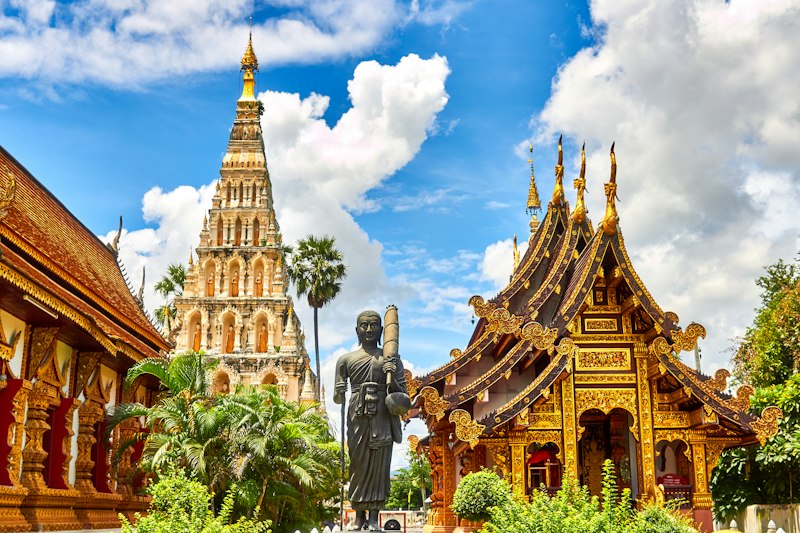
- Festival highlight: Yi Peng and Loy Krathong (November) fill the skies and rivers with lanterns, especially in Chiang Mai. Songkran, the water-fight new year, drenches the whole country in mid-April.
- Check current conditions on the Tourism Authority of Thailand before booking.
Vietnam
Best time: It depends where — Vietnam is 1,650 km long and has three climate zones.
-
North (Hanoi, Sapa, Ha Long Bay): March-April and September-November are the sweet spots. Winters (December-February) can be cold and misty; summers are hot and wet.
-
Central (Hoi An, Da Nang, Hue): February to May is driest. Skip October-November, when this coast gets serious flooding.
-
South (Ho Chi Minh City, Mekong Delta): Dry season is December to April; wet season May to November.
-
Festival highlight: Tet (Lunar New Year, late January or February) is the country's biggest celebration — magical, but many businesses close, so plan around it.
Cambodia
Best time: November to April, the dry season.
This is prime time for Angkor Wat — you'll catch that famous sunrise without getting drenched, and December-January are the coolest, most comfortable months. From June the wet season arrives, though the rain also fills the moats and greens the landscape, which some travelers prefer for photos and thinner crowds.
- Festival highlight: Bon Om Touk, the Water Festival (usually November), turns Phnom Penh's riverfront into a boat-racing spectacle.
Laos
Best time: November to February — dry, mild, and pleasant.
Laos follows the mainland pattern. The dry, cooler months are best for the Mekong, Luang Prabang, and northern trekking. March and April bring haze from agricultural burning plus rising heat, and the wet season (May-October) makes some rural roads tricky but the waterfalls spectacular.
- Festival highlight: Boun Pi Mai (Lao New Year, mid-April) is a joyful, water-splashing affair.
Bali and Indonesia
Best time: April to October, the dry season.
Bali's dry season is ideal for surfing, temple visits, and rice-terrace treks, with reliable sunshine and lower humidity. The wet season (November-March) brings daily downpours, though mornings often stay clear. Note that this is the opposite of much of the mainland's peak, so Bali shines when parts of Thailand are getting wet.
- Festival highlight: Nyepi, the Day of Silence (usually March), shuts down the entire island — no flights, no traffic, no going out. A genuinely singular cultural experience if you plan for it.
Malaysia and Singapore
Best time: Year-round, but pick your coast.
Malaysia sits right on the equator, so it's warm and humid all year with rain possible any month. The trick is the monsoon split:
- West coast (Kuala Lumpur, Langkawi, Penang): Driest December to April.
- East coast (Perhentian and Tioman islands): Best March to October; the northeast monsoon (November-February) can close island resorts entirely.
- Borneo (Sabah, Sarawak): March to October is best for diving and jungle trekking.
Singapore is a year-round city-break destination, with slightly wetter months from November to January.
The Philippines
Best time: December to May, the dry season.
Island-hopping in Palawan, surfing in Siargao, and beach time across the archipelago are all better without rain. The wet season (June to November) overlaps with typhoon season, so watch forecasts closely if you travel then. February to April are the reliably driest, sunniest months.
- Festival highlight: Sinulog (January) in Cebu is one of the country's biggest and most colorful street festivals.
Myanmar
Best time: November to February.
Comfortable temperatures and minimal rain make these months ideal for the temple plains of Bagan and cruising Inle Lake. March to May turns intensely hot, and the wet season runs June to October. Always check current travel advisories before planning a trip here.
Quick Reference: When to Go Where
| If you want... | Go... | |----------------|-------| | Thailand's beaches at their best | November-February | | Angkor Wat without the rain | November-April | | Bali sunshine | April-October | | Vietnam's central coast dry | February-May | | Philippine island-hopping | December-May | | Fewer crowds and lower prices | May-October (mainland wet season) |
Timing Tips That Save You Money
- Shoulder season is the sweet spot. The edges of the dry season (November and April on the mainland) often give you great weather with smaller crowds and lower prices.
- Wet season isn't a write-off. Rain usually comes in short afternoon bursts. You'll trade some beach days for cheaper flights, emptier temples, and lush green scenery.
- Watch for festival price spikes. Songkran, Tet, and Chinese New Year send prices up and fill trains and buses. Book well ahead or plan around them.
- Pack for humidity year-round. Even in dry season, bring light, quick-dry clothing and a compact rain layer.
Every dollar counts when you're on the road — our guide to budget travel that lets you see the world pairs perfectly with smart seasonal timing.
Let Atlas Nail Your Timing
The honest answer to "when should I go?" is "it depends on where and what you want" — and that's exactly the kind of question Atlas loves. Tell it your dream destinations and rough dates, and it'll check live weather, flag festivals, and find the best-value window for your trip. Start planning with Atlas and get your timing right from the first message.