Travel Safety Tips for the Modern Traveler in 2026
The best travel safety tips aren't about fear — they're about preparation so you can relax and enjoy the trip. Staying safe on the road in 2026 means covering four bases: your digital life, your physical surroundings, your health, and your worst-case backup plan. Get these right once, build them into a routine, and safety stops being something you worry about and starts being something you've already handled.
This guide is the deep dive. If you're planning a trip alone, pair it with our solo travel guide for the bigger picture on destinations, budgets, and meeting people.
Before You Go: Your Pre-Trip Safety Checklist
Most travel trouble is prevented at home, weeks before departure. Work through this once and you're most of the way there.
- Check the official advisory for every country on your route. The US State Department travel advisories and the UK Foreign travel advice are free, government-run, and updated constantly. They flag regional risks, entry rules, and local emergency info.
- Enroll with your embassy if your country offers it (the US has STEP; the UK and others have similar registration). It means your government knows where you are if a crisis hits.
- Copy your documents. Keep a photo of your passport, visas, insurance policy, and cards in the cloud and on your phone offline. Leave a paper copy with someone at home.
- Sort your money. Bring at least two cards from different networks, stored separately, plus emergency cash in USD, which is accepted almost everywhere.
- Book a travel clinic visit 6-8 weeks out for any required or recommended vaccinations — some need multiple doses over weeks.
Digital Security on the Road
Your phone holds your money, your identity, and your itinerary. Protect it like the valuable it is.
Lock Down Your Accounts
- Turn on two-factor authentication for email, banking, and cloud storage before you leave.
- Set a strong device passcode and enable remote wipe (Find My iPhone, Find My Device) in case of theft.
- Create a travel-specific email for bookings so a leak doesn't expose your main inbox.
Wi-Fi and Connection Hygiene
- Treat every public Wi-Fi network — hotel, café, airport — as untrusted. Use a reputable VPN whenever you connect, and avoid banking or sensitive logins on shared networks entirely.
- An eSIM is often safer than hunting for Wi-Fi: you land with your own data connection and never have to join a sketchy hotspot.
- Keep location sharing on with one or two trusted contacts, but avoid posting real-time locations publicly. "I'm at this remote beach right now" is an open invitation you don't want to send.
Physical Safety and Street Smarts
Opportunistic theft is the most common risk travelers actually face — not dramatic crime, just distraction and a quick hand.
On the Street
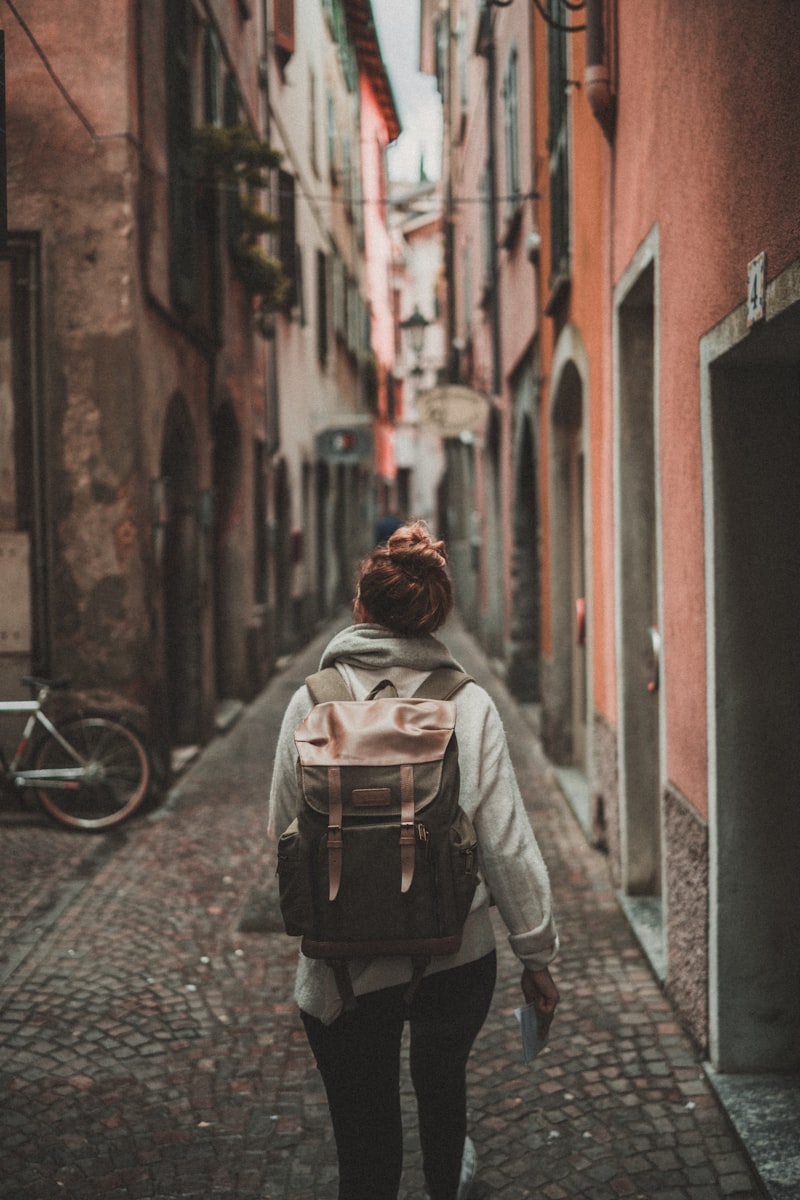
- Walk with purpose. Looking like you know where you're going deters opportunists more than anything else.
- Carry your phone in a front pocket or a zipped crossbody bag, never a back pocket or an open tote.
- Keep expensive jewelry, watches, and cameras low-key, especially in crowded markets and on transit.
- Be extra alert at ATMs, transit hubs, and anywhere a "helpful stranger" gets unusually close. Common scams involve a spill, a dropped item, or a fake petition — all designed to occupy your hands and eyes.
- Learn the local emergency number before you arrive. It is not 911 everywhere — it's 112 across the EU, 000 in Australia, 119 in parts of Asia.
At Your Accommodation
- Read recent reviews specifically for safety mentions before booking.
- Always use the door lock and the in-room safe; a portable door-stop alarm adds cheap peace of mind for budget stays.
- On arrival, locate your nearest emergency exit and note the address in the local language so you can direct a taxi or show a passerby.
Health and Wellness Abroad
A ruined trip is far more often about a stomach bug than a headline event.
Food and Water
- Choose busy food stalls with high turnover — fast rotation means fresh food.
- In regions with unsafe tap water, drink bottled or filtered water and skip ice and raw-washed salads until you know the area.
- Pack a small first-aid kit with rehydration salts, basic pain relief, plasters, and any anti-nausea or anti-diarrheal meds you might need.
Medications and Climate
- Carry prescription medication in its original labeled packaging, with a copy of the prescription, and check it's legal at your destination — some common drugs are restricted in certain countries.
- Hydrate hard in tropical and desert climates, use insect repellent in mosquito-prone areas, and know where the nearest hospital or clinic is in each city.
Transport Safety
Getting from A to B is where a surprising share of travel incidents happen, so a little caution pays off.
- Use licensed transport. Stick to official taxi ranks, metered cabs, or reputable ride-hailing apps where they operate. Agree the fare before you get in if there's no meter, and note the plate.
- Sit smart on long journeys. On overnight buses and trains, keep your valuables physically on you — a money belt or a bag looped around your leg — not in the overhead rack or under the seat.
- Rideshare check. Confirm the car, plate, and driver's name match the app before you climb in, share your trip status with a contact, and sit in the back.
- Renting a car or scooter? Photograph any existing damage before you drive off, check that your travel insurance and the local law actually cover you (many policies exclude scooters), and never ride without a helmet, even where locals do.
Money and Scam Awareness
Scams evolve, but the classics keep working because they exploit courtesy and distraction. Being aware defuses most of them.
- The "free" gift. Someone ties a bracelet on your wrist or hands you a sprig of herbs, then demands payment. Keep your hands to yourself and walk on.
- The rigged taxi meter or "broken" meter. Agree a price up front or insist on the meter; if the driver refuses, use a different cab.
- The distraction team. One person spills something or asks for directions while another goes for your bag. Step back, keep your bag closed and in front, and be wary of sudden commotion.
- ATM skimming. Use machines inside banks where possible, cover the keypad, and check for anything odd attached to the card slot. Enable transaction alerts so you spot fraud instantly.
Carry only what you need for the day, and leave the rest — spare cards, extra cash, passport — locked in your accommodation safe.
Travel Insurance: Non-Negotiable
If you can't afford travel insurance, you can't afford the emergency it covers. A single overseas medical evacuation can run into six figures. A solid policy should cover:
- Medical emergencies and evacuation
- Trip cancellation, interruption, and major delays
- Lost, stolen, or damaged belongings
- Any adventure activities you'll actually do (diving, skiing, and trekking are often excluded from base plans)
Read the exclusions, not just the headline coverage. That's where the surprises live.
When Things Go Wrong: Your Emergency Plan
Even with perfect prep, things happen. A calm plan beats panic every time.
- Lost passport? Go to your embassy or consulate — that's exactly what they're for. Your document copies speed up the replacement dramatically.
- Card stolen? Call the number you saved separately and freeze it, then switch to your backup card and emergency cash.
- Medical emergency? Call the local emergency number, then your insurer's 24/7 assistance line — they can direct you to approved hospitals and handle billing.
- Natural disaster or unrest? Follow embassy instructions and official channels, not social media rumors. Offline maps and a charged power bank matter most here.
Save these three things offline before every trip: your embassy contact, the local emergency number, and your insurer's assistance line. If you'd rather not dig for them, you can ask Atlas to pull safety info, emergency numbers, and visa or health requirements for any destination in seconds.
Travel Confidently
Safety isn't the opposite of adventure — it's what makes adventure sustainable. Build these habits once and they run in the background, freeing you to be present for the reason you left home in the first place. Prepare well, trust your instincts, and go see the world.