
Sundarbans
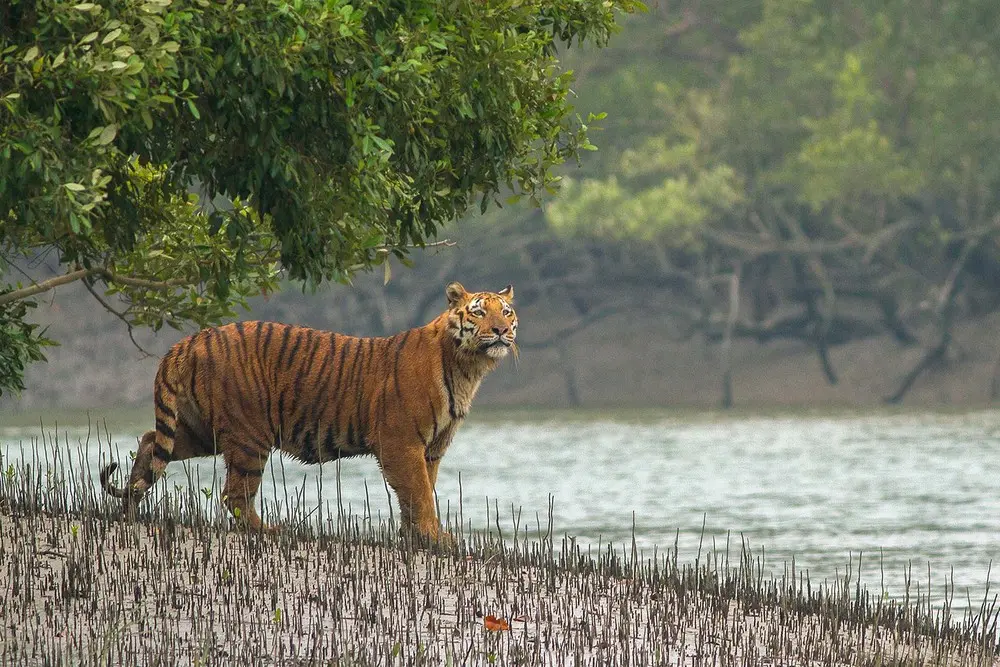
The Sundarbans is not a place you visit so much as a place you enter. The world's largest tidal mangrove forest sprawls across the delta where the Ganges, Brahmaputra and Meghna rivers pour into the Bay of Bengal, a vast labyrinth of channels, mudflats and salt-tolerant trees shared between Bangladesh and India. There are no roads here. You explore entirely by boat, and that is what makes it unforgettable. This is one of the last strongholds of the Royal Bengal tiger, a famously elusive swimmer that patrols these islands. Spotting one is never guaranteed and always thrilling, but the Sundarbans offers far more than a single headline animal. Estuarine crocodiles bask on muddy banks, spotted deer and wild boar move through the forest edge, and the birdlife is spectacular, from kingfishers to eagles. Watch, too, for macaques, monitor lizards and the endless play of tide over root. A typical trip is a multi-day cruise on a live-aboard boat, drifting deep into the forest with smaller launches for creek exploration. Popular stops include the watchtower and beach at Kotka, the southern point of Hiron Point, and Dublar Char, a fishing island famous for its dried-fish harvest. Guided walks along boardwalks and creeks bring you eye to eye with the mangrove ecosystem that acts as a living shield against cyclones and tidal surges. A few essentials keep you safe and comfortable. This is a protected UNESCO World Heritage Site and a genuine wilderness, so travel only with a licensed guide and permit, never wander off alone, and follow every safety instruction. Tigers and tides both demand respect. Bring binoculars, insect repellent, neutral-coloured clothing and patience, because wildlife rewards the quiet and the still. The dry, cooler months of November to February are the prime window, with comfortable temperatures, active wildlife and calmer waters. This is also when tiger sightings, while still rare, become a little more likely as animals move toward riverbanks. Three days is the sweet spot, enough to reach the deeper, wilder zones rather than skimming the edges on a rushed day trip. Go for the atmosphere as much as the animals. Dawn mist rising off the water, the creak of the boat, the sheer scale of a forest that stretches beyond every horizon. The Sundarbans is raw, patient and quietly humbling, one of the great wildlife journeys of South Asia.
Why You'll Love It
Wildlife safari
Mangrove ecosystem
Boat expeditions
Unique biodiversity
Must-See Spots
Sundarbans Forest
Kotka
Karamjal
Hiron Point
Tiger Point
Dublar Char
Mangrove Creeks
Where to Eat
Boat meals
Local cuisine
Insider Tips
Book guided tours only
Follow safety rules
Carry binoculars
Respect wildlife
Common Questions
Ready for Sundarbans?
Tell Atlas when you're going and what you want to do. Flights, hotels, and a full itinerary, ready in seconds.
Plan My Trip