
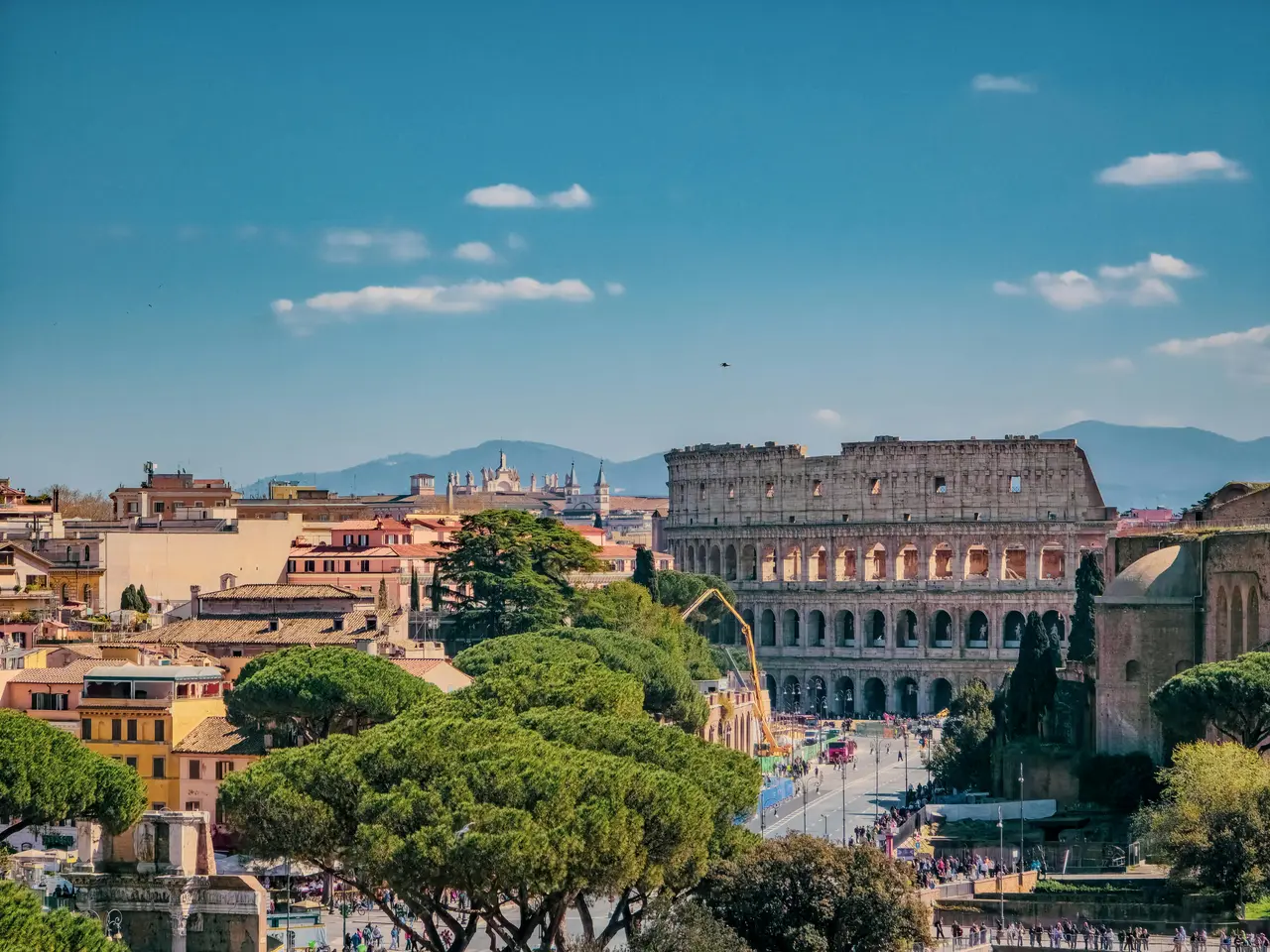
They call Rome the Eternal City, and it earns the name. Nowhere else can you sip an espresso beside a 2,000-year-old temple, round a corner into a Baroque fountain, and cross a piazza where emperors once held court, all before lunch. Rome layers ancient, Renaissance, and modern life on top of each other, and the result is a city that feels less like a museum and more like history that never stopped happening. Start where the empire did. The Colosseum still stuns up close, and the neighboring Roman Forum and Palatine Hill let you walk the streets of ancient Rome. Nearby, the Pantheon is the showstopper, a nearly 2,000-year-old temple with a soaring domed ceiling and an open oculus to the sky, and it remains astonishingly intact. Buy timed tickets in advance for the big sites; the lines are real and the summer sun is relentless. Cross the river and you enter another city-within-a-city. Vatican City, the world's smallest sovereign state, holds St. Peter's Basilica and the Vatican Museums, the latter culminating in Michelangelo's Sistine Chapel ceiling. It's overwhelming in the best way, so go early, wear something that covers shoulders and knees, and pace yourself. But Rome isn't only monuments. Half the joy is simply wandering. Toss a coin into the Trevi Fountain, climb the Spanish Steps, browse the market at Campo de' Fiori, and get pleasantly lost in Trastevere, the cobblestoned neighborhood that comes alive at night with trattorias and wine bars. And you must eat: this is the home of cacio e pepe, carbonara, crispy Roman-style pizza, supplì, and gelato that ruins all other gelato for you. The historic center is best explored on foot, and honestly you'll see the most that way. When your feet give out, the metro is quick for longer hops, buses fill in the gaps, and the city is very walkable overall. Skip driving entirely; central Rome and cars do not mix. A few honest notes: Rome is busy and can be pricey in tourist zones, so eat a few streets away from the big sights for better food at fairer prices, and stay alert for pickpockets on crowded transport. The euro is the currency. Spring and autumn bring the kindest weather and thinner crowds. Three to four days lets you cover the icons without burning out, though Rome always leaves you wanting one more day.
Why You'll Love It
Ancient ruins
Historic sites
Food culture
Art heritage
Must-See Spots
Colosseum
Vatican City
Trevi Fountain
Pantheon
Roman Forum
Spanish Steps
Piazza Navona
Where to Eat
Italian cuisine
Insider Tips
Book tickets early
Walk the city
Avoid peak heat
Stay central
Common Questions
Ready for Rome?
Tell Atlas when you're going and what you want to do. Flights, hotels, and a full itinerary, ready in seconds.
Plan My Trip