
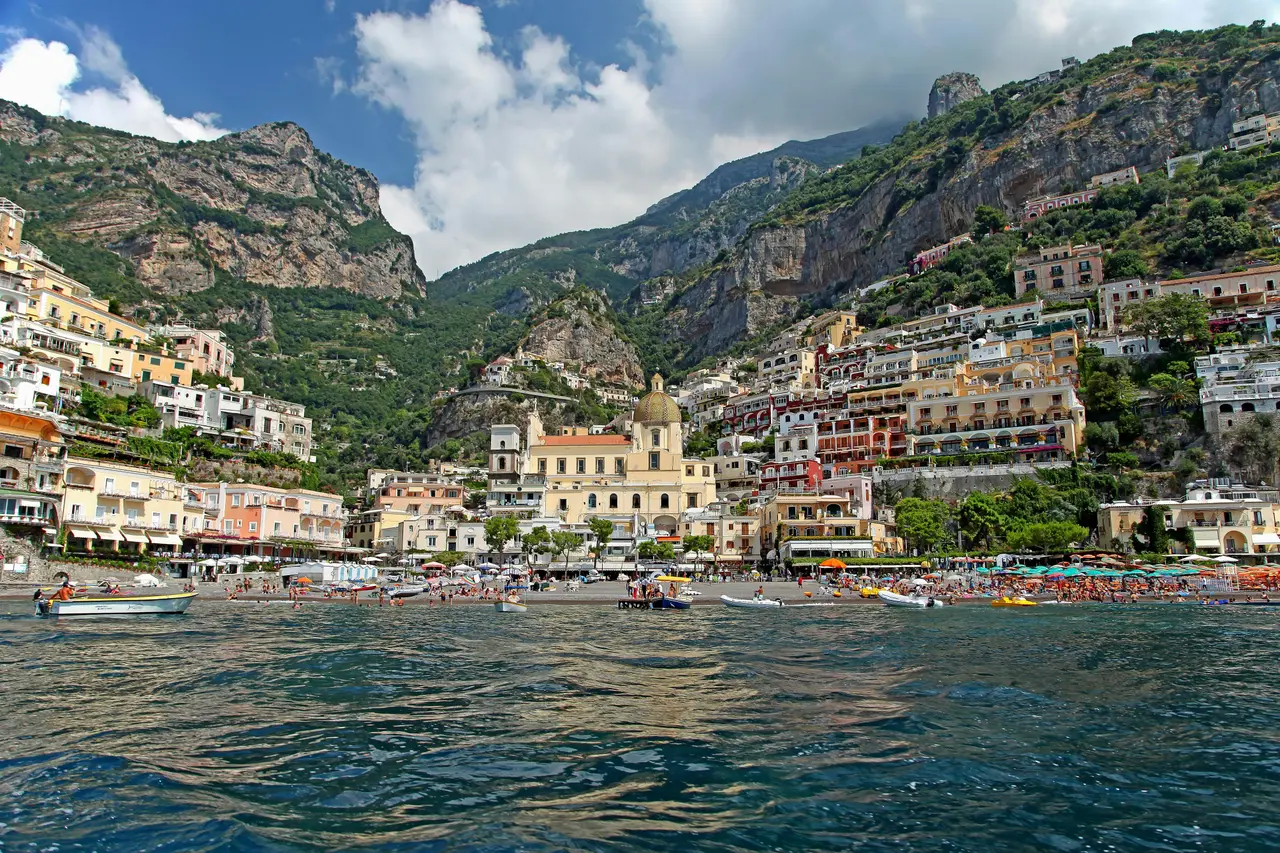
Positano looks almost impossible in person. Pastel houses tumble down a near-vertical cliff toward the Tyrrhenian Sea, stacked so tightly they seem to be holding each other up. It's the postcard image of Italy's Amalfi Coast, and somehow it lives up to the hype. This is a place to wander slowly, eat well, and let the sheer drama of the setting do the heavy lifting. The village is essentially one long, gorgeous descent. Narrow lanes zigzag past boutiques selling linen and handmade sandals, lemon-everything shops, and terraced restaurants, all funneling down to Spiaggia Grande, the main pebble beach. The domed, majolica-tiled church of Santa Maria Assunta anchors the center, and its Byzantine Black Madonna is worth a look inside. Fair warning: everything here involves stairs, so comfortable shoes matter more than fashionable ones. Beyond strolling, the water is the main event. Rent a lounger on Spiaggia Grande or walk over to the quieter Fornillo beach, or better yet, hire a small boat to explore hidden coves, sea caves, and the nearby island of Li Galli. A boat trip also gives you the classic view of Positano rising from the sea, which is the angle that ends up on everyone's camera roll. Active travelers should tackle the Path of the Gods (Sentiero degli Dei), a spectacular clifftop trail between the villages above the coast with jaw-dropping sea views the whole way. It's one of the finest coastal walks in Europe and a fantastic antidote to sitting on a beach. Positano is also perfectly placed for exploring the wider coast. Ferries run in the warmer months to Amalfi, Sorrento, and Capri, and they're far more pleasant than the winding, often gridlocked coastal road. In fact, the ferry is the smartest way to arrive and get around, since driving and parking here range from stressful to nightmarish. Be honest with yourself about two things. First, Positano is expensive; it's one of Italy's priciest spots, and dining, hotels, and beach clubs reflect that. Second, it gets extremely crowded from roughly June through August. Visit in late spring or early autumn for warm weather, swimmable seas, and slightly more breathing room. The euro is the currency, and a day or two is enough to fall for the place, though many happily linger longer to slow down and simply enjoy the view.
Why You'll Love It
Colorful cliffs
Luxury vibe
Beach relaxation
Romantic scenery
Must-See Spots
Spiaggia Grande
Church of Santa Maria
Path of Gods
Boat Tours
Beach Clubs
Shopping Streets
Where to Eat
Italian restaurants
Insider Tips
Stay central
Book early
Use ferries
Prepare for stairs
Common Questions
Ready for Positano?
Tell Atlas when you're going and what you want to do. Flights, hotels, and a full itinerary, ready in seconds.
Plan My Trip